
London just produced another AI headline.
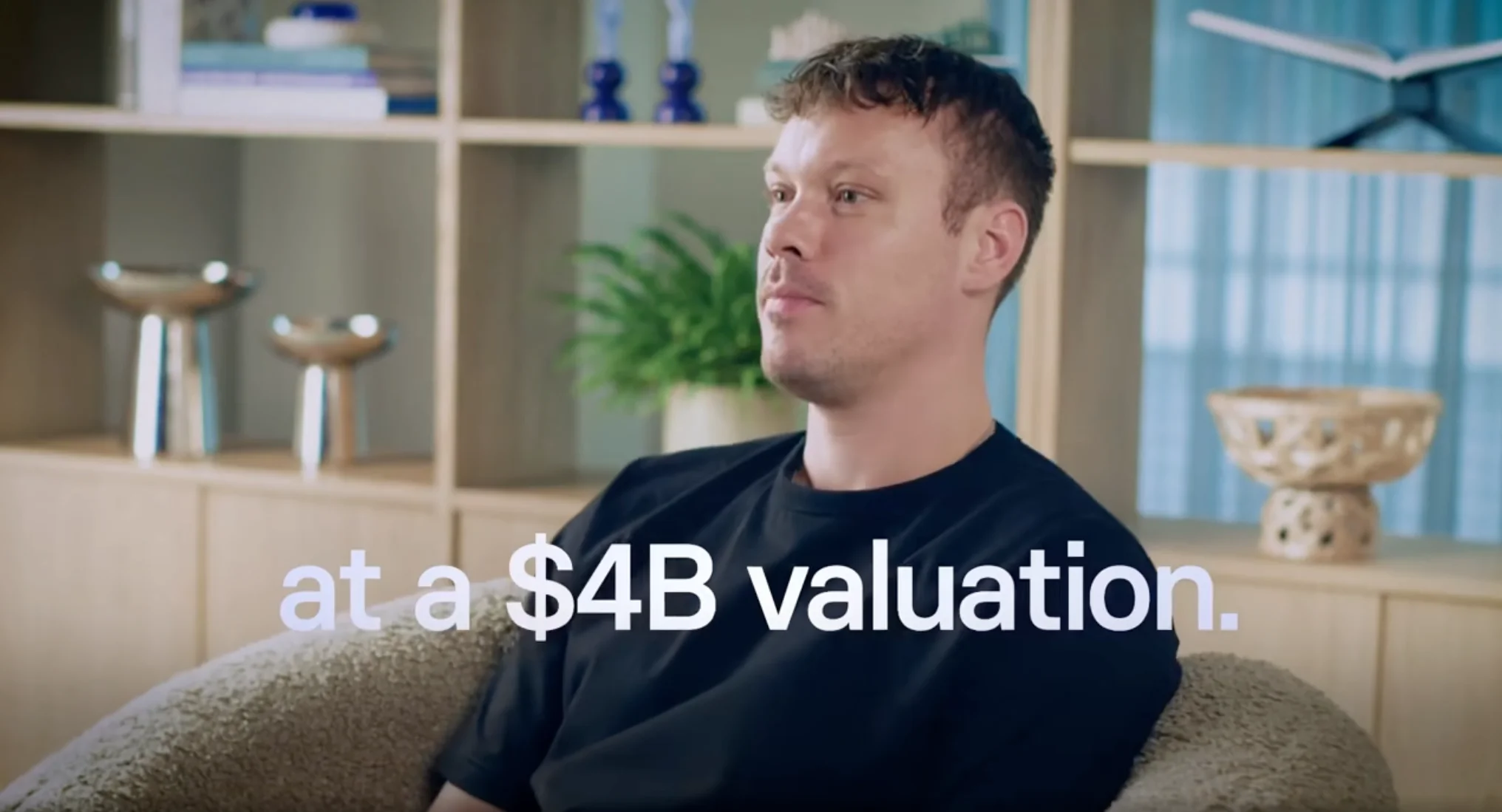
Synthesia, the AI video platform that turns text into professional videos with lifelike avatars, has raised $200 million in Series E funding at a $4 billion valuation. That's nearly double the $2.1 billion it was valued at in January 2025 when it raised $180 million in Series D.
And they turned down a $3 billion acquisition offer from Adobe to get here.
The round was led by existing investor Google Ventures (GV), with participation from Evantic (founded by former Sequoia partner Matt Miller), Hedosophia, and a constellation of heavyweight backers including NVIDIA's NVentures, Accel, Kleiner Perkins, and New Enterprise Associates. Total funding now exceeds $536 million.
But what makes this raise particularly notable isn't just the numbers. It's what Synthesia plans to do with the capital.
From AI Videos to AI Agents
Synthesia isn't just making videos anymore. They're building conversational AI agents that can interact with viewers in real time.
Think about that for a second. Instead of watching a training video passively, employees could ask questions, role-play scenarios, and receive tailored explanations. The video talks back.
Victor Riparbelli, Synthesia's CEO and co-founder, shared the news on LinkedIn:
"Today marks the next chapter for Synthesia as we announce our $200M Series E lead by GV. It's been quite a ride since 2017 when we set out to transform how people make video. Now, 8 years later, so much of that vision has come to fruition as evident everywhere around us. It's truly incredible how good AI video has become in the last two years.
Up until now it's been mostly about making video as we know it with AI. This is often referred to as the 'bridge-period' where new technology copies old formats, like when the first films were just recorded theater or early GPS was just a digital map with no navigation.
Now, it's time to figure out what AI-native video truly looks like - when we let go of the priors and rethink video in the context of language models, real-time video generation, smartphones and so much more.
With this new round, it's all about helping people work better - both with AI video and a bunch of new real-time products, like Skills. We'll be sharing much more in the coming months!
Grateful to all of our amazing customers, Synthesian's and investors!"
The company's new product, Skills, is part of this vision. Early pilots have reportedly shown higher engagement and faster knowledge transfer compared to traditional formats. The Synthesia 3.0 platform introduced Video Agents that can talk, listen, and respond to viewers dynamically.
The Enterprise Play
Synthesia isn't chasing content creators on TikTok. Their focus is squarely on enterprise, and it's paying off.
Over 90% of Fortune 100 companies now use the platform. Clients include Bosch, SAP, Merck, Xerox, Heineken, and Zoom. The company crossed $100 million in annual recurring revenue in April 2025 and is projecting beyond $200 million for 2026.
That enterprise focus sets them apart from competitors like HeyGen and OpenAI's Sora, which target creators and consumer markets. It also explains why Adobe reportedly tried to acquire them for $3 billion earlier this year.
Synthesia said no.
The Team Behind the Technology
The company was founded in 2017 by a team of AI researchers and entrepreneurs from UCL, Stanford, Cambridge, and Technical University of Munich. Co-founder Professor Lourdes Agapito's research at UCL pioneered methods for capturing 3D models of humans from 2D images, making low-cost AI video generation possible.
Riparbelli himself started as a digital strategy consultant in Copenhagen before founding multiple startups, including crypto portfolio tracker Coincall (sold in 2019). He met co-founder Professor Matthias Niessner through his work in immersive technologies and saw an opportunity to transform video production.
Getting their first investment wasn't easy. European VCs passed nearly 100 times before Mark Cuban agreed to back them. That persistence seems to be embedded in the company's DNA.
Peter Hill, who spent 25 years in technical leadership at Amazon, joined as CTO in 2025 to lead the company's next phase of scaling.
Employee Liquidity Without an IPO
One unusual aspect of this round: Synthesia is offering employees a structured secondary sale in partnership with Nasdaq's private markets platform.
The exchange isn't acting as a public trading platform here. Instead, it's facilitating private market transactions that allow early team members to convert their shares into cash at the same $4 billion valuation as the Series E.
"This secondary is first and foremost about our employees," CFO Daniel Kim told TechCrunch. "It gives employees a meaningful opportunity to access liquidity and share in the value they've helped create, while we continue to operate as a private company focused on long-term growth."
This model could become more common among UK startups choosing to stay private longer.
A UK Success Story
Chancellor Rachel Reeves didn't miss the chance to celebrate. "Synthesia is a UK success story, creating new jobs and opportunities in this country," she said in the company's announcement.
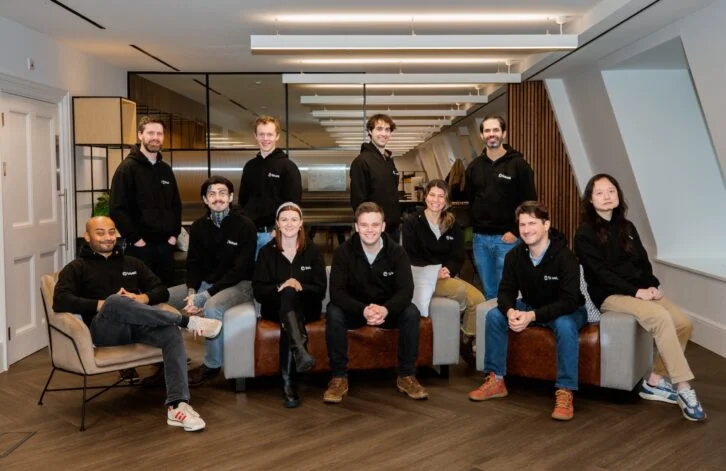
The company now employs around 600 people across offices in London, Amsterdam, Copenhagen, Munich, New York, and Zurich. Their 20,000-square-foot London headquarters serves as the core R&D and operations base.
Synthesia is now the UK's most valuable generative AI media company by valuation, according to Dealroom. In a year when UK tech incorporations hit record highs and the country secured second place globally in tech funding, this raise reinforces London's position as a serious AI hub.
What Founders Should Watch
Synthesia's journey offers some lessons worth noting.
Enterprise focus pays off. While competitors chased viral consumer markets, Synthesia built for the boardroom. Corporate training isn't glamorous, but it's a massive, recurring need.
Patience with European capital. Nearly 100 European VCs passed before they found their first investor. The company stayed the course and built anyway.
Founder-led vision matters. Riparbelli talks about rethinking video from first principles, not just adding AI to existing formats. That kind of thinking tends to attract both customers and capital.
Academic roots create moats. Having world-class AI researchers as co-founders gave Synthesia technology that's genuinely hard to replicate.
For founders building in AI, the Synthesia story shows what's possible when you combine deep technical innovation with relentless enterprise focus. The UK's AI ecosystem is maturing, and companies like this are leading the way.
Building a tech startup in the UK? Join The Tech Founders community for guides, funding news, and founder resources.
Related guides: