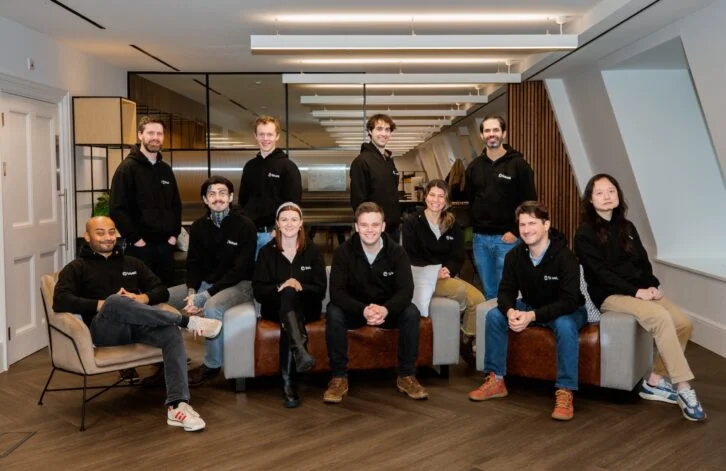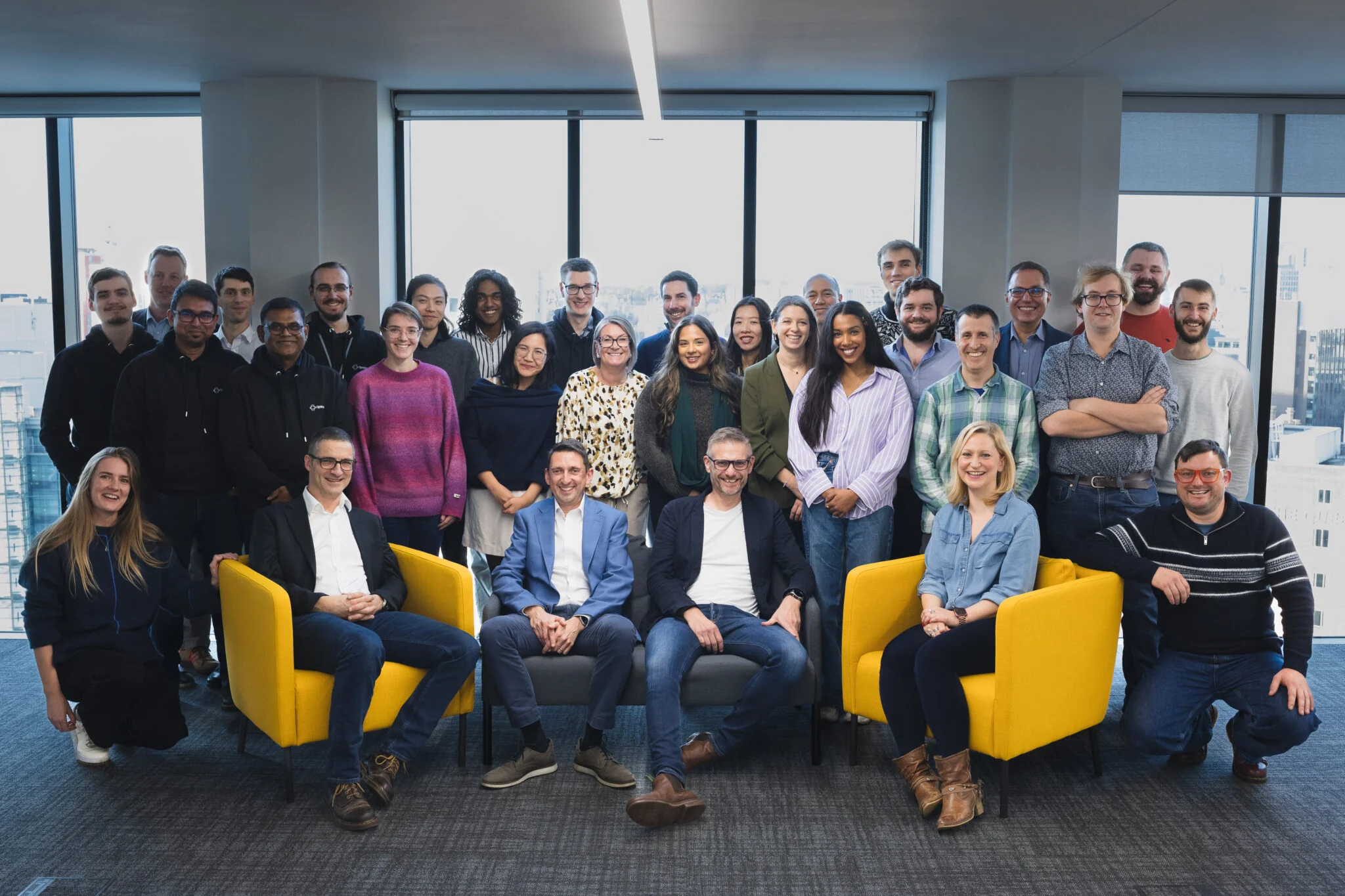

A Leeds company building technology that keeps data encrypted even while it's being processed has just raised £23 million in fresh funding.
Optalysys, the photonic computing company, secured the investment in a Series A extension round led by Northern Gritstone with participation from imec.xpand, Lingotto Horizon, and the UK government's National Security Strategic Investment Fund (NSSIF). This follows the company's £21 million Series A in July 2023, bringing total funding to over £44 million.
The backing from NSSIF, a government fund focused on technologies important to national security, signals that Optalysys is building something the UK considers strategically valuable.
So what exactly does this company do?
As AI and cloud workloads continue to grow exponentially, conventional electronic computing is reaching its physical limits. Optalysys takes a different approach. The company's technology integrates data movement and processing on a single chip, combining silicon photonics with digital technologies to deliver immense computational power whilst reducing the carbon footprint of energy-intensive electronic methods.
The company is developing a programmable, high-density layer designed to run compute-intensive workloads, including GenAI and post-quantum algorithms, forming a foundation for next-generation cloud infrastructure. One key application is fully homomorphic encryption (FHE), which allows data to be processed securely while remaining encrypted. This is an increasingly important capability for secure cloud and enterprise computing.
In simple terms, you could send your company's sensitive financial data to a cloud service, have it analysed by AI, and get results back without the cloud provider ever seeing your actual numbers. The data stays encrypted the whole time.
Early forms of FHE technology are being used in digital form in Optalysys' LightLocker Node servers launched last year, described as the world's first dedicated hardware solution designed for encrypted blockchain applications.
Dr Nick New, CEO and co-founder of Optalysys, said: "We are at a defining moment in the evolution of computing. Photonic computing opens up fundamentally new capabilities, allowing data to be moved and processed with far greater speed and efficiency. This investment validates both the scale of the opportunity ahead and our ability to execute against it. It allows us to expand into new markets and take an important step towards making photonic computing a mainstream part of cloud infrastructure."
New founded Optalysys in 2013 alongside Robert Todd, the company's CTO. Both have spent over 20 years working in optical computing, starting in Cambridge before moving the company to Leeds to draw on the city's resources and the University's strong expertise in the field. For founders watching the UK's position in global tech funding, this is the kind of deep technology that attracts serious capital.
That's 13 years from founding to this latest funding round. Building hardware-based technology takes time, patience, and the right investors. The company's backers reflect what it takes to support such ventures: Northern Gritstone focuses on long-term deep-tech investments from the North of England, Lingotto (backed by the Agnelli family who own Ferrari) takes patient positions, and imec.xpand brings semiconductor industry expertise.
The team has also been strengthened recently. In 2024, Optalysys appointed Dipesh Patel as chairman. Patel spent 25 years at Arm, the Cambridge chip design company, including serving as Chief Technology Officer. When someone with that background joins a UK deep-tech startup, it suggests the technology is being taken seriously by industry insiders.
Robert Todd, CTO and co-founder, said: "Recent acquisitions in the semiconductor industry have highlighted the role that photonics can play in addressing the limits of electronic computing, particularly in processing capability and power consumption, resulting from the demands of training and running even larger AI models. Optalysys' approach uniquely combines data movement and compute within the same package. Expanding to the US is an exciting and natural next step for us, so that we can tap into its strong photonics ecosystem and the immense talent located in Silicon Valley."
Part of the new funding will go towards that American expansion. For UK companies building enterprise technology, the US often represents the largest market opportunity.
The company has also been building partnerships. Collaborations with Google's HEIR project, Duality Technologies, and Zama place Optalysys within a growing network of companies working on privacy-preserving computing. For founders thinking about how to position their startups, these kinds of strategic relationships can accelerate commercial progress even before core technology fully matures.
Duncan Johnson, CEO of Northern Gritstone, said: "Optalysys is scaling towards global success. The company is building technology for the next generation of computing and has the team, technology and commercial traction that we, as investors, want. We're excited to support the team as they continue to commercialise their technology and deliver real-world impact across multiple industries."
Optalysys was also named Tech Company of the Year at the 2024 Prolific North Awards, recognition that world-class tech companies are being built outside London.
For founders preparing pitch decks or planning funding rounds, this story offers a useful example. Patient technology development over more than a decade, strategic partnerships, the right mix of investors, and a genuine technological advantage can position a regional UK startup for global impact.
The investment will be used to accelerate the commercialisation of Optalysys' proprietary photonic chips and support expansion into the US. As AI systems grow larger and concerns about data security intensify, the market timing may be working in their favour.
Building a tech startup in the UK? Join The Tech Founders community for more funding news, guides, and founder resources.