
The India AI Impact Summit 2026 kicked off today in New Delhi.
And the UK did not just show up. It showed up with serious intent, bringing its AI Minister, Deputy Prime Minister, and some of the country's most exciting AI companies to one of the biggest global stages for artificial intelligence.
If you are building in AI or thinking about international expansion from the UK, this is a moment worth paying attention to.
The UK Delegation Means Business
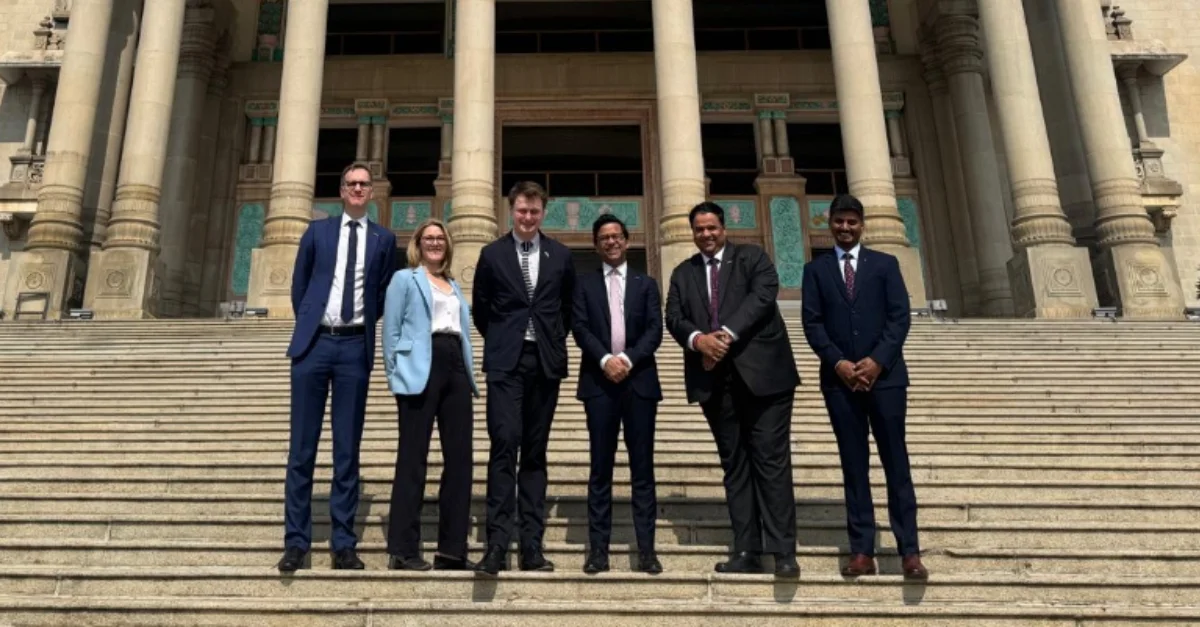
Deputy Prime Minister David Lammy and AI Minister Kanishka Narayan are leading the UK's delegation at the summit, which runs from 16 to 20 February across multiple venues in Delhi. The official statement from the UK Government makes one thing clear: the UK sees AI not just as a technology play, but as the engine of national renewal.
Minister Narayan landed in Bengaluru ahead of the summit and wasted no time setting the tone. In his own words, he described bringing a "distinct British AI vision" rooted in the heritage of Alan Turing and Karen Sparck Jones, and grounded in the ambition of UK founders building globally significant companies.
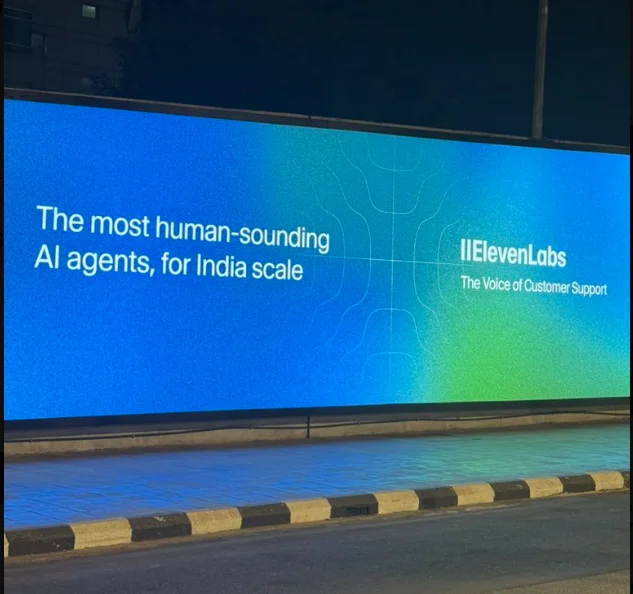
He specifically called out ElevenLabs, Fractile AI, OLIX Computing, Synthesia, Wayve, and more as examples of exceptional UK-born AI companies now competing on the world stage.
That is not just political posturing. These companies collectively represent billions in recent funding and are actively shaping the future of voice AI, autonomous driving, AI video, and custom chip design.
UK Deputy Prime Minister David Lammy said:
The UK is leading the way on AI innovations and expertise. We are rightly a magnet for investment and talent from across the globe.
This Summit is an important moment in determining how we can work together with our international partners to unlock the full benefits and potential of AI, while baking in robust and fair safety standards that protect us all.
We are turning ambition into action to deliver UK jobs, growth and prosperity. The business leaders joining us in India will build concrete partnerships and secure investment that delivers opportunity for working people in the UK, India and across the globe.
UK AI Minister Kanishka Narayan said:
AI is the defining technology of our generation – and we’re determined to make sure it delivers for everyone. It can cut waiting times, transform public services, create new jobs and give hard working communities a fresh start – and that’s exactly the message we’re taking to the summit.
It is central to our plans for delivering national renewal but its benefits can’t and shouldn’t be reserved by the few.
That’s why the UK is leading from front, pushing a global vision for AI that helps people everywhere to learn more, earn more, and shape the future on their terms.
Why India Matters for UK Tech
The India AI Impact Summit follows the Bletchley Park AI Safety Summit (hosted by the UK in 2023), the Seoul Summit in 2024, and the Paris AI Action Summit in 2025. But this one has a different feel. The emphasis has shifted from AI safety and governance towards practical impact, real-world deployment, and measurable outcomes.
India presents a massive opportunity that UK tech companies cannot afford to ignore. Here is why:
India's AI market was valued at approximately $13 billion in 2025 and is projected to reach over $130 billion by 2032, growing at a compound annual growth rate of 39%. That is one of the fastest-growing AI markets on the planet.
The country has over 600,000 AI professionals and accounts for 16% of the global AI talent pool. It ranks second globally in public generative AI projects on GitHub. India is also one of the top markets for ChatGPT, with OpenAI's Sam Altman confirming 100 million weekly users in the country.
For UK startups thinking about scaling internationally, India offers a tech-savvy consumer base of over 700 million internet users, a rapidly expanding digital infrastructure built on platforms like Aadhaar and UPI, and an increasingly AI-native enterprise market hungry for solutions.
UK-India Tech Trade Is Already Significant
This is not a cold start. The UK and India already have deep technology ties.
Major Indian tech firms like Infosys, Tata Consultancy Services, and Wipro have been expanding their UK operations significantly. During Prime Minister Starmer's visit to Mumbai last October, Indian companies committed a combined £1.3 billion in new investments into the UK.
Going the other way, UK firms generate more than £47.5 billion in revenue from their business operations in India. That is a staggering figure and highlights just how intertwined these two economies already are.
The summit builds on Vision 2035, a joint UK-India roadmap agreed by both prime ministers to deepen cooperation in science, technology, and innovation. For early-stage founders, this kind of bilateral framework creates real pathways for market entry, partnerships, and growth.
The UK's AI Ecosystem Is Punching Above Its Weight
The UK's position at this summit reflects something bigger. Since taking office in the summer of 2024, the UK government has attracted more than £100 billion worth of private investment into the country's AI sector.
That includes Google's £5 billion investment in UK AI infrastructure, NVIDIA's historic £11 billion commitment to deploy 120,000 Blackwell Ultra GPUs in UK data centres by the end of 2026, and Google DeepMind's sweeping partnership with the UK government covering everything from fusion energy research to public services.
UK-based AI companies are also commanding serious global attention. ElevenLabs recently raised $500 million at an $11 billion valuation. Synthesia raised $200 million. Wayve secured one of the top AI investments in the UK. And OLIX Computing, led by a 25-year-old founder, raised $220 million for its AI chip venture.
The UK is home to Arm, the company whose chip architecture powers virtually every smartphone on the planet. Google DeepMind, one of the most important AI research labs in the world, is headquartered in London. These are not minor advantages. They are foundational.
What the UK Is Pushing for at the Summit
The UK delegation's agenda at the summit is focused on two key themes.
The first is the adoption of AI to spread opportunities for people both in the UK and India. Minister Narayan emphasised this in his remarks upon arrival, framing AI as a tool that helps doctors diagnose faster, teachers personalise learning, and councils deliver services more efficiently.
The second is the responsible adoption of AI. The UK wants to lead on safety regulations and ensuring that people across both countries are protected in their online experiences. This builds directly on the work the UK started at Bletchley Park and has carried through to every subsequent summit.
The UK is also announcing new global initiatives as part of its £58 million AI for Development programme, including an Asian AI4D Observatory for responsible AI governance across South and Southeast Asia, and an AI4D Compute Hub at the University of Cape Town to give African innovators access to compute power.
What This Means for UK Founders
If you are a UK tech founder, here is the bottom line.
India is emerging as one of the most important markets for AI-driven products and services globally. The UK government is actively building diplomatic and trade pathways to help British businesses tap into this market. And the fact that the UK's top AI companies are already being showcased at this level tells you something about how the UK became tech's most wanted destination.
The India AI Impact Summit is not just a diplomatic event. It is a signal that the UK-India tech corridor is open for business. With India's AI market set to grow tenfold over the next seven years, UK startups with solutions in voice AI, enterprise automation, AI infrastructure, and responsible AI governance have a genuine window of opportunity.
The UK is not just participating in the global AI race. It is setting the pace.
Building a tech startup in the UK? Join The Tech Founders community for the latest news, guides, and resources to help you grow.