
Isomorphic Labs, the London-based AI drug discovery company spun out of Google DeepMind in 2021, has raised $2.1 billion in Series B funding. The round was led by Thrive Capital and brings the company's total external funding to $2.7 billion in just over a year.
The financing was announced on 12 May 2026. New investors include MGX, Temasek, CapitalG, and the UK Sovereign AI Fund. Existing backers Alphabet and GV also participated.
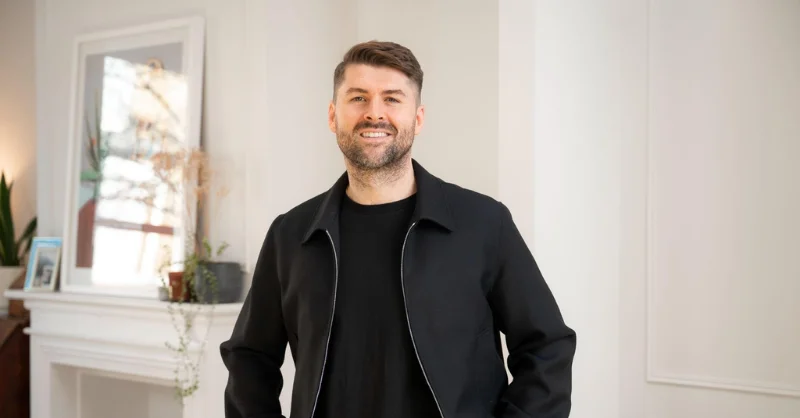
Isomorphic Labs is led by founder and CEO Sir Demis Hassabis, who won the 2024 Nobel Prize in Chemistry for his work on AlphaFold while also serving as CEO of Google DeepMind. The company sits at the intersection of AI research and pharmaceutical development, two sectors where UK founders have rarely competed at scale.
What will Isomorphic Labs do with the $2.1 billion?
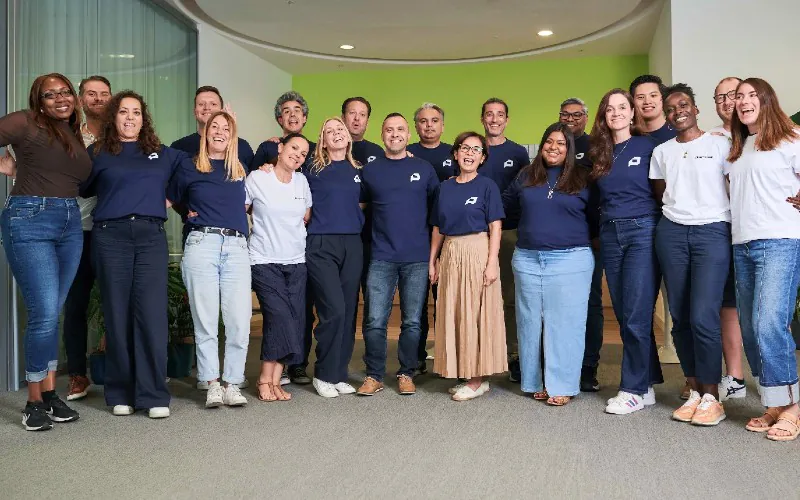
The capital will go into three areas. First, scaling the Isomorphic Drug Design Engine, known internally as IsoDDE. Second, expanding the company's pipeline of therapeutic programmes towards clinical trials. Third, hiring AI, engineering, drug design, and clinical talent across the company's offices in London, Cambridge (Massachusetts), and Lausanne.
IsoDDE is the unified AI system Isomorphic has built to predict how drug candidates will interact with proteins in the human body. It is designed to compress what traditionally takes pharmaceutical companies years of laboratory work into a computational workflow. Earlier this year, the company published a subset of IsoDDE's capabilities, showing predictive accuracy across multiple therapeutic areas.
"This funding round is a massive vote of confidence from a diverse group of top-tier international investors in our AI-first approach to drug design and development," said Sir Demis Hassabis. "Now that we have shown our approach is fundamentally sound, our focus is on scaling our technology to its full potential."
Why is this Isomorphic Labs Series B significant for UK tech?
The numbers tell the story. This Series B is more than three times the size of the company's $600 million Series A, which closed in March 2025 with Thrive Capital also leading. The round ranks among the largest funding rounds ever for an AI drug discovery company globally.
For UK founders, two signals stand out. The first is the participation of the UK Sovereign AI Fund. A sovereign fund putting capital into a homegrown AI biotech sends a clear message about the government's intent to keep frontier AI infrastructure on British soil. The second is that Isomorphic, despite its founder also running Google DeepMind, has stayed headquartered in London. Companies operating at this scale often face pressure to relocate to San Francisco or Boston.
Max Jaderberg, President of Isomorphic Labs, said the AI drug design engine has already proven itself across internal programmes by hitting milestones and identifying viable candidates with what he described as a repeatable design process.
Who are the investors backing Isomorphic Labs?
Thrive Capital, the New York-based firm founded by Joshua Kushner, led both Isomorphic's Series A and this Series B. Thrive's portfolio includes OpenAI, SpaceX, Stripe, and Databricks. The firm manages over $50 billion in assets.
The new investor mix is worth noting. MGX is the UAE's state-backed AI investment vehicle. Temasek is Singapore's sovereign wealth fund. CapitalG is Alphabet's independent growth fund. Add the UK Sovereign AI Fund into the picture, and Isomorphic now has government-linked capital from four different countries pulling in the same direction.
Joshua Kushner of Thrive Capital said his conviction in the team has deepened over the past year as Isomorphic has built what he calls a unified AI drug design engine. Dr. Krishna Yeshwant, Managing Partner at GV, described the team as the premier group at the intersection of AI and drug discovery.
What does this mean for UK AI founders?
For founders building in the UK, this round is a useful data point. It shows that a London-based deep tech company can raise serious capital without needing to redomicile. It also shows that international sovereign funds are willing to write large cheques into British AI infrastructure, not just American ones.
The deeper signal is about category creation. Isomorphic has spent four years convincing pharmaceutical companies that AI-first drug design is a real discipline, not a tool. Strategic partnerships with Novartis, Eli Lilly, and Johnson & Johnson have given it commercial validation that few AI biotech startups can match. UK founders working in regulated, scientifically complex industries can take notes on how to build conviction with both pharma and venture capital at the same time.