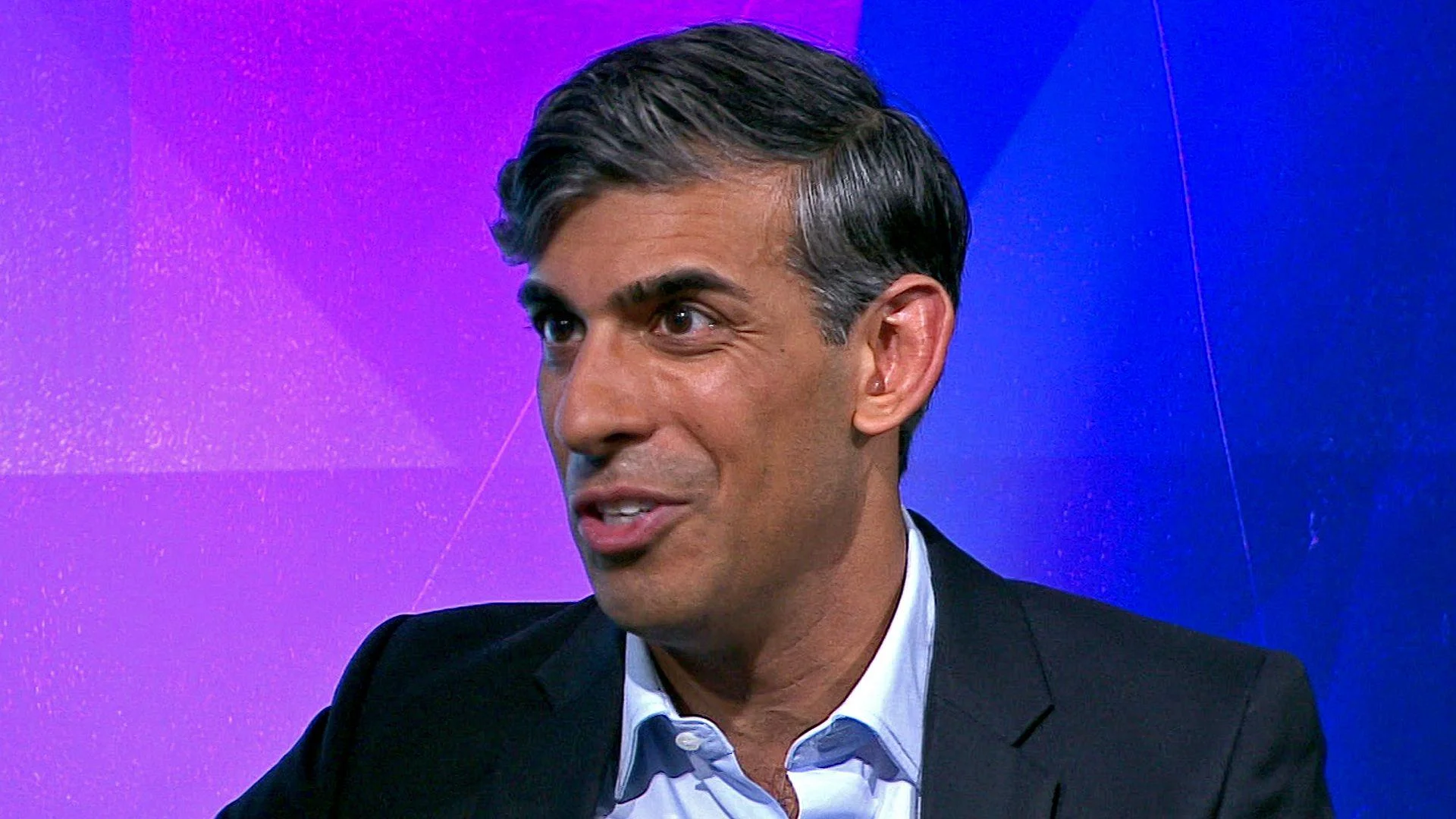

Rishi Sunak, former UK Prime Minister and now a senior adviser to Anthropic and Microsoft, has called for the abolition of National Insurance to stop AI from tilting the hiring equation away from human workers.
Speaking on BBC Newsnight on 22 April 2026, Sunak told Faisal Islam that company bosses are privately telling him recruitment of young people is flattening because of the technology.
His proposal is blunt: scrap the employer payroll tax over time and replace the lost revenue with higher taxes on corporate profits, which he argues will be swollen by the productivity gains AI delivers. The logic rests on a simple asymmetry. When a business hires a person, it pays 15% employer National Insurance on earnings above £5,000. When it deploys an AI agent to do the same work, it pays nothing equivalent. That gap, Sunak argued, gives firms an immediate financial reason to choose software over people.
Why is Sunak raising this now?
The interview comes at a moment when the data on entry-level hiring is becoming difficult to ignore. The World Economic Forum reported in March 2026 that US entry-level job postings had fallen by 35% in 18 months, with AI cited as a primary driver. The British Chambers of Commerce flagged a similar decline in the UK during the same month. At the World Economic Forum Annual Meeting in January 2026, Anthropic CEO Dario Amodei warned that AI could eliminate half of all entry-level white-collar jobs.
Sunak said the impact is already visible in UK service sectors. Law firms, accountancies, and creative industries are all reducing junior intake as AI tools handle work that previously fell to graduates. He described a new phrase circulating among CEOs: "flat is the new up", meaning businesses expect to grow revenue without growing headcount.
How does UK employer National Insurance work right now?
The employer NI rate currently stands at 15%, after the Labour government raised it from 13.8% in April 2025 and lowered the secondary threshold from £9,100 to £5,000. The Employment Allowance offsets up to £10,500 for eligible businesses, but for any company hiring beyond that relief, the cost of each new employee starts at 15% of everything they earn above £5,000. For a startup hiring its first few employees on £30,000 salaries, that is an extra £3,750 per person per year in tax before wages, pensions, or any other cost.
An AI agent performing equivalent work carries no payroll tax, no pension auto-enrolment obligation, and no employment rights overhead. For founders navigating the UK visa system and building teams from scratch, these costs add up fast. Sunak's argument is that this imbalance will accelerate the shift towards automation unless the tax system is restructured.
What did Sunak propose as the solution?
Sunak suggested abolishing National Insurance over time and funding the gap through taxes on corporate profits. His reasoning: if AI makes businesses more productive and profitable, then taxing those profits rather than taxing the act of hiring captures the same revenue without penalising employment.
He framed the choice as binary. Governments can either use tax policy to encourage AI as a tool that helps people do their jobs better, or they can leave the current structure in place and watch companies opt for full automation. He acknowledged this is not a UK-only problem, noting that every country dependent on employment taxes will face the same reckoning as AI adoption scales.
What does this mean for UK founders?
If you are building an AI startup, Sunak's comments signal that the political conversation around AI and employment is moving fast. The question is no longer whether AI displaces jobs, but how governments respond when it does. And the UK is responding earlier and more openly than most.
For founders hiring junior staff, the current employer NI rate of 15% is a real cost that shapes how you build your team. If you are choosing between hiring a graduate and subscribing to an AI tool, the tax system currently makes the AI tool cheaper before you even compare output. Whether Sunak's proposal gains traction or not, the direction of travel is clear: expect more policy proposals aimed at rebalancing the cost of human labour against AI.
The bigger picture, though, is encouraging. The UK is attracting record levels of AI investment from the world's largest tech companies, and the fact that a former Prime Minister is actively pushing for tax reform to protect workers while championing AI growth puts Britain ahead of most countries in having this conversation at all.
Sunak also used the interview to talk up the UK's position in the global AI race. He described himself as a believer in what the tech industry is calling "Londonmaxxing" and "Britmaxxing", referring to the wave of multi-billion pound AI investments flowing into the UK from companies like Microsoft, Google, NVIDIA, and Anthropic. He pointed to the UK AI Security Institute, which he established during his premiership, as evidence that Britain can lead on both AI innovation and safety. He described the UK as "an AI superpower any which way you look at it", citing the presence of DeepMind, Anthropic, and OpenAI in Britain. He also revealed he had joined forces with Labour Deputy Prime Minister David Lammy to promote UK tech investment at a recent AI summit, a rare cross-party signal that both sides of Westminster see AI as a national priority.
The full interview aired on BBC Newsnight on 22 April 2026.
Related guides: